Three surfaces. One sequence of care.
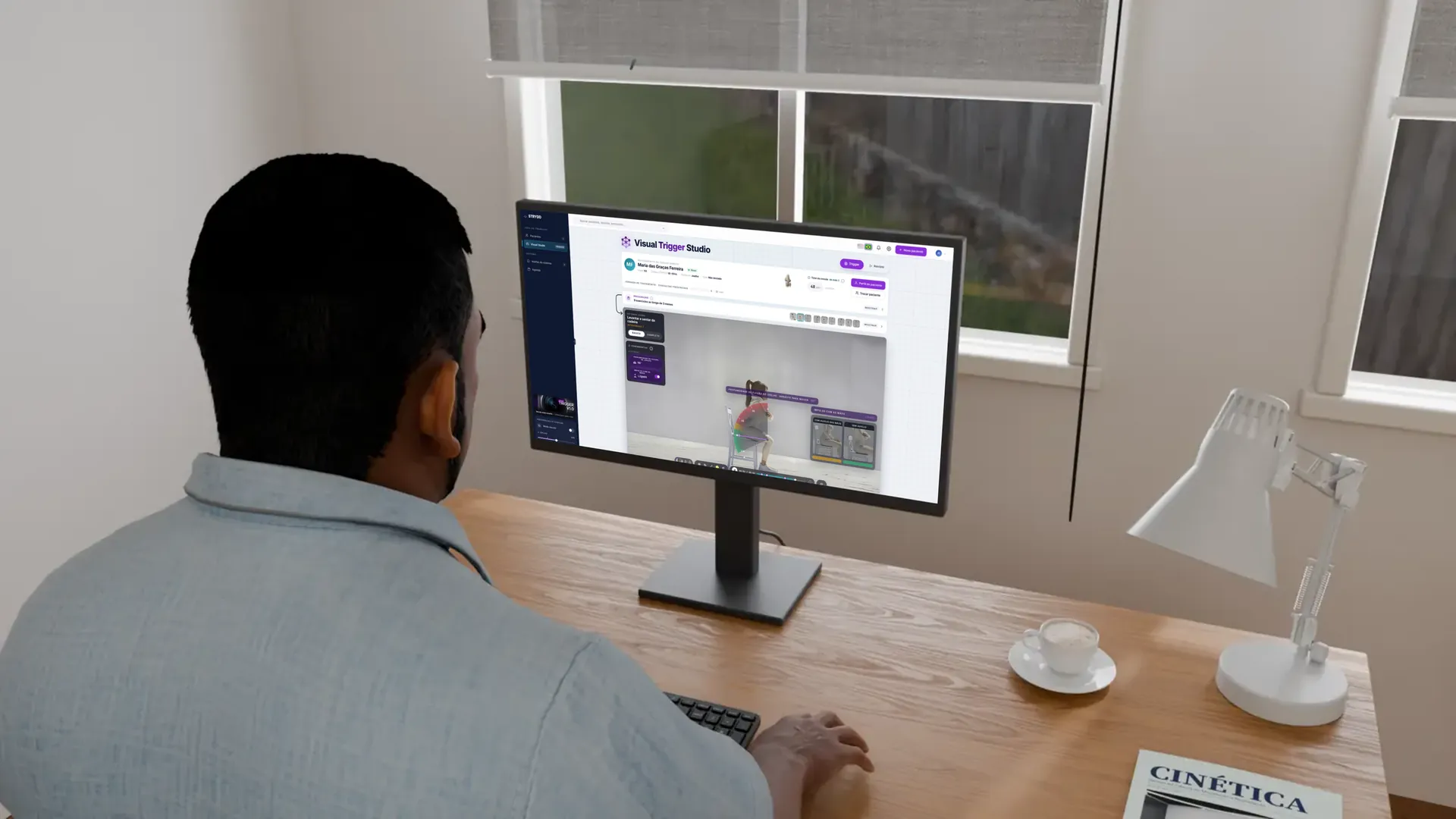
The patient does the session at home with the app. The platform measures the recording afterwards. The physiotherapist reviews it on the dashboard and decides. Everything on this page is a real screen or a faithful drawing of the platform, with fictitious data. The interface is in Portuguese.
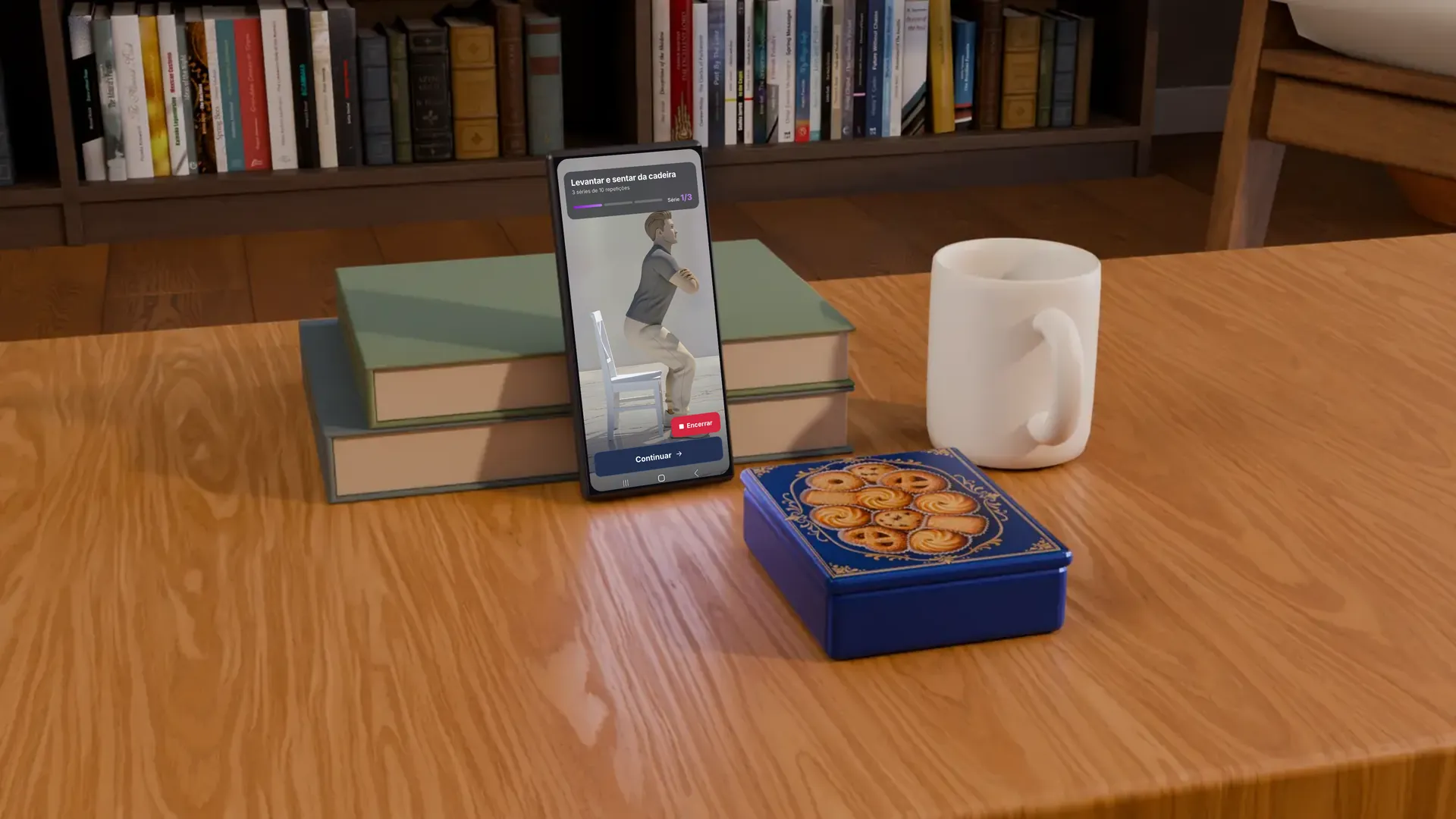
iOS and Android. The day's session, guided.
The video for each exercise, with the characters Tom and Lia, the recording of the set and the pain record. No sensors and no equipment: just the phone the patient already has.
The day's session, one tap away.
The patient opens the app and sees today's session, the programme week and a short tip. One button starts it all.
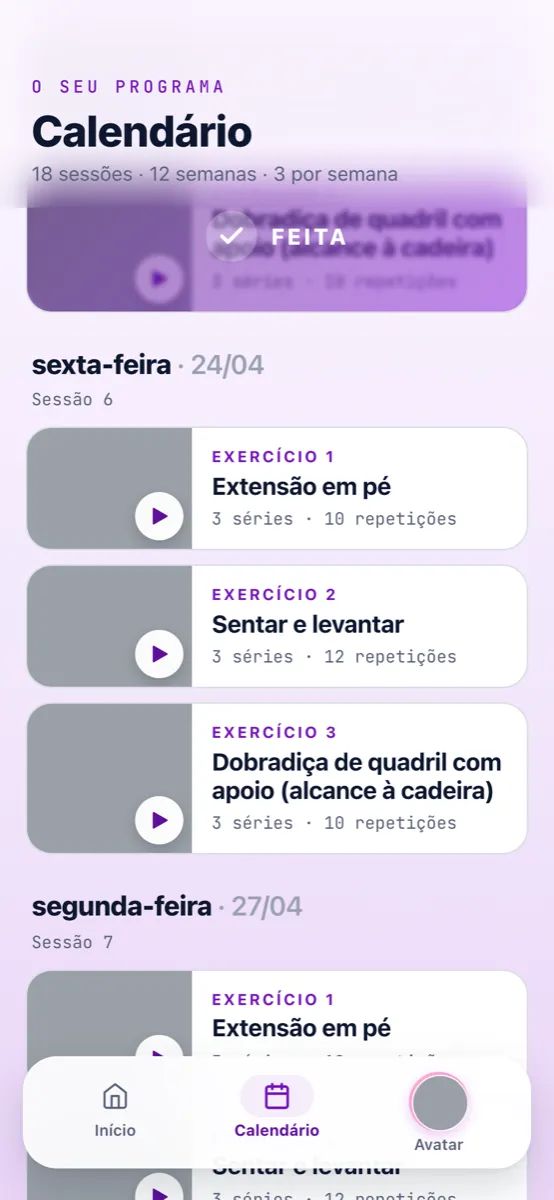
Twelve weeks, session by session.
The calendar shows every session and every exercise in the programme, with the demonstration video by the characters Tom and Lia.
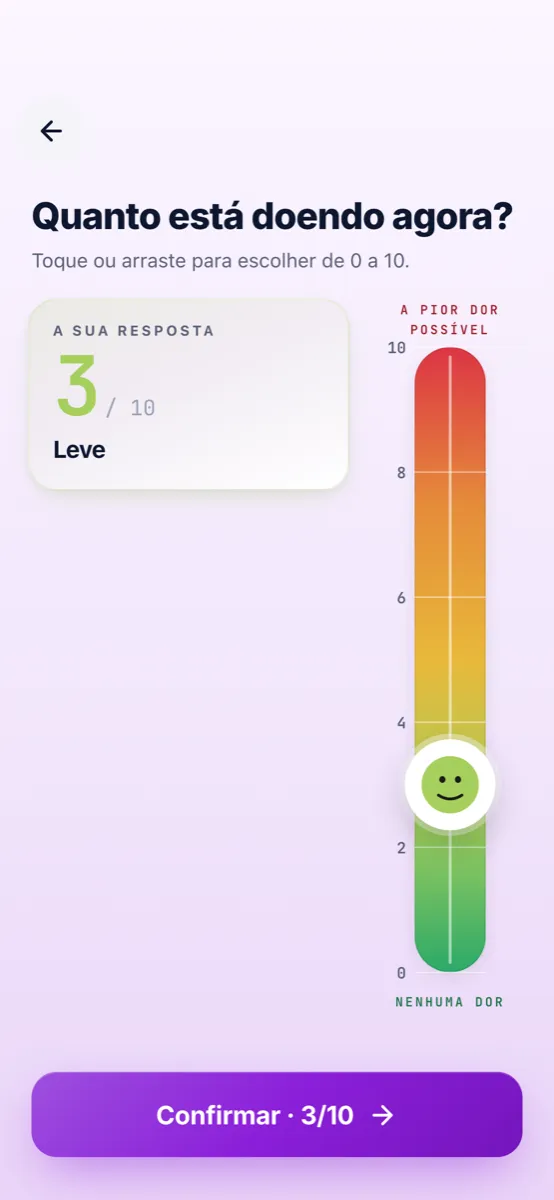
Today's pain, recorded.
Before starting, the patient marks pain on a 0 to 10 scale. The record reaches the physiotherapist together with the session.
The phone records. That's all.
During the set, the app shows the repetition target and the current set. The camera records for review later; nothing is measured on the patient's screen.
Rest, on the programme's clock.
Between sets, a timed rest, for as long as the programme sets.
Session complete. The clinic is informed.
When done, the patient sees the session summary. The recording and the records go on to the physiotherapist to review.
Tom and Lia demonstrate every exercise.
Each exercise in the programme has a demonstration video with two synthetic characters, Tom and Lia. No patient appears in these videos.
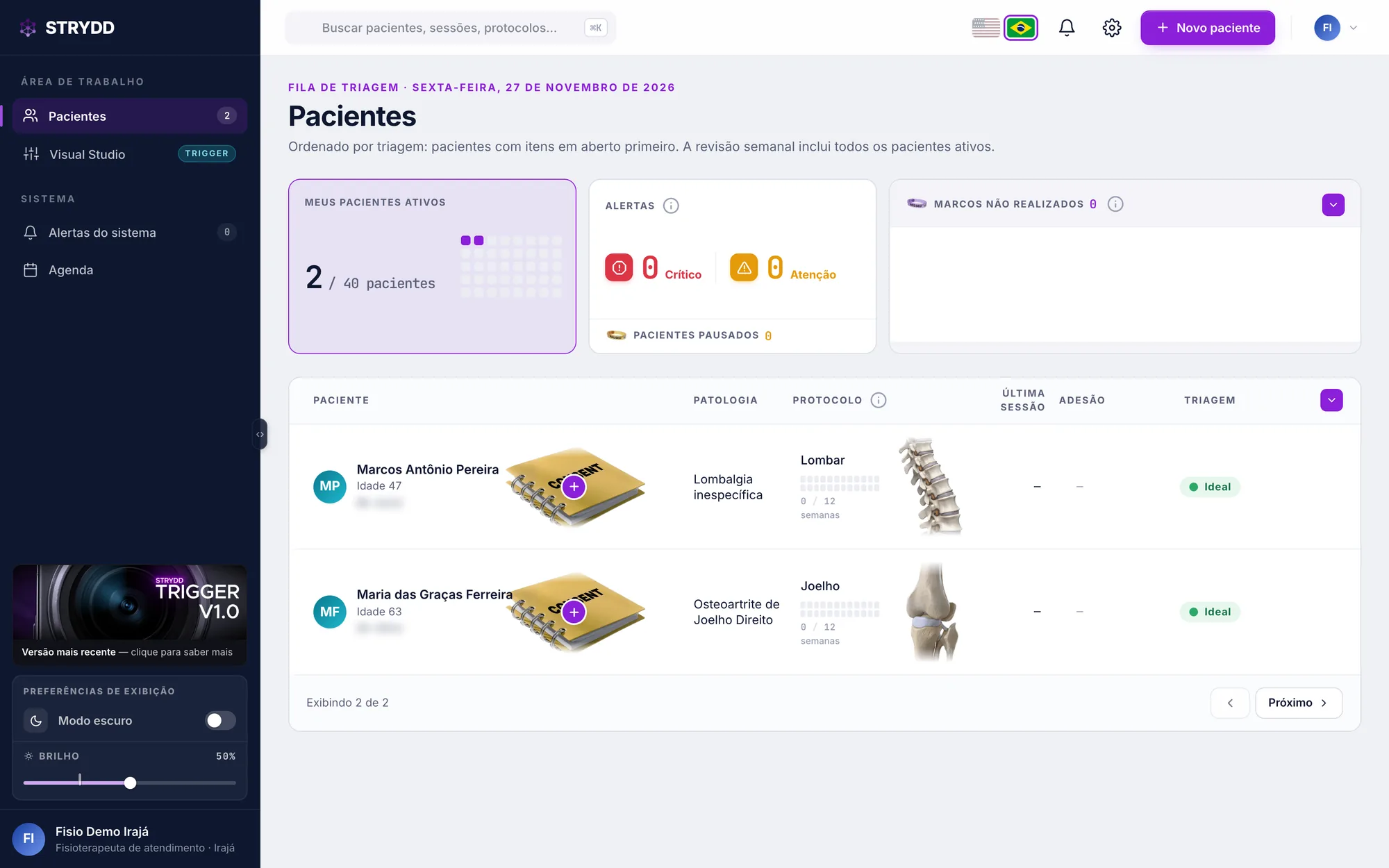
Patients, alerts and a review queue.
The dashboard orders the clinic by what needs attention: who crossed a limit, who has no recent record, who is on track. Each review item is written without a clinical label: the measurement, the limit, the set, the repetition and the second of the recording.
Each patient's movement, repetition by repetition.
In the Review Studio, the physiotherapist replays the recording with the measurements overlaid, compares them with the programme's limit and chooses the feedback. The feedback sent to the patient is fixed text from a catalogue, and the physiotherapist chooses which to send; none is generated by the system.
A measurement that is missing, and acknowledged as missing, is better than a wrong number presented with the appearance of certainty.
The decision always belongs to the physiotherapist.
- Does not diagnose.
- Does not prescribe.
- Does not decide treatment.
- Does not correct the patient during the recording.
- Does not stop or pause a programme on its own.
- Does not replace in-person assessment.
- Does not sort the patient into clinical categories.
- Does not perform risk assessment.
The software measures, counts and displays. The physiotherapist selects, diagnoses and decides.